
God Who Gave Himself to Us to the Point of Pain and Death – Without Residue
~+~
I told you, some time ago, that people who have a slave or hireling relationship with God do not want to direct and dedicate all their energy, their whole selves – without residue, to God, because such is the very nature of their relationship. The slave acts out of fear, and the hireling acts out of interest, so that he gives only a part of himself, a part of his energy, as much as his fear will pass or as much as he will achieve his interest.
But what is the relationship that the children of God build with God? When we build a personal and loving relationship with God, we invest our whole selves, all our energy, in such a relationship. Moreover, in such a relationship we only give ourselves, without asking for anything for ourselves, and in this way we preserve both our freedom – even in relation to God, and our love for Him, i.e. we preserve both the image and likeness of God in which we are created. The same applies to our relationships with each other.
After all, what other relationship is it normal to build with God, Who dedicates all of Himself to you and gives all of Himself to you, all of His uncreated energy, all of His love – without a residue? And not only that, our God is the God Who became incarnate and became Man – the God-Man; Who lived with us and taught us; Who was condemned and crucified; and Who suffered and died for us, in order to save us from sin, death and the devil. He is the God Who gave Himself to us to the point of pain and death – without a residue.
It is precisely this personal and loving relationship – of children of God, and towards our neighbours, that the Gospel of the day we heard today wants to remind us: “But love your enemies, do good, and lend, expecting nothing in return. And your reward will be great, and you will be sons of the Most High; for He is kind to the unthankful and evil. Therefore, be merciful, just as your Father also is merciful” (Luke 6:35-36).
It is obvious that the test of our relationship towards God – whether it is as children of God, is the relationship towards our neighbours – whether we treat them with mercy, as our brothers and sisters, and children of God. This is on the one hand, and on the other hand, the fulfilment of God’s commandments – to be merciful to all, enables us to have a full-of-grace communion with God, which in turn gives us the strength for gathered and completely prayerful direction of the energy of our mind towards our heart, towards God.
The use of both functions of the mind – both the secondary and the primary, in fulfilling the commandments of God – love for our neighbours and love for God, enables us to transfigure the energy of the mind and, the knowledge of God. The Holy Apostle Thomas longs for this kind of knowledge of God, and not only to listen to the stories of others – even if they were Apostles, about the Resurrection of Christ. The gospel reading of today’s feast also wants to encourage us to this kind of knowledge of God – from personal experience, not only to listen to the homilies of bishops and presbyters. No one has achieved anything by listening, but by doing – yes.
Most Holy Theotokos, save us!
Metropolitan of Strumica Mr. Nahum
19 / 10 / 2025
++++++
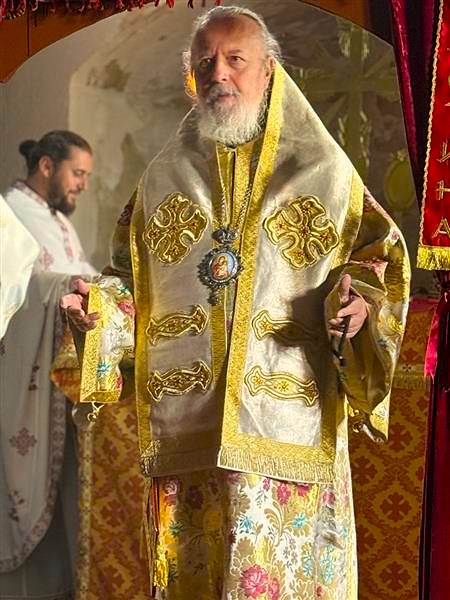
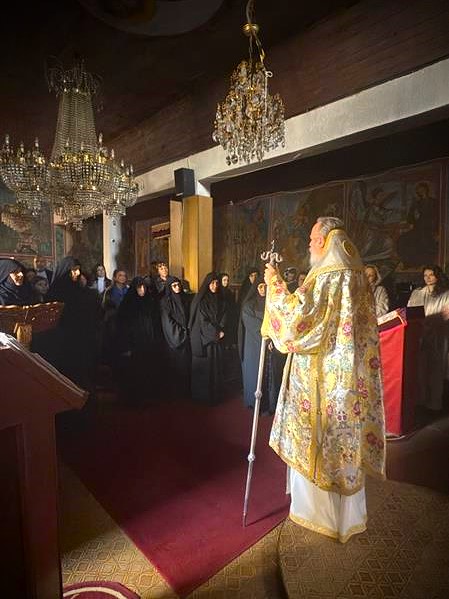
Divine Liturgy in the church of “Saint George the Great Martyr” in New Dojran.
